


Growing up was fun. I grew up in a big household with five sisters and an older brother. I hold many positive memories of my childhood. If I close my eyes now and think back, I can hear a lot of laughter!
However, from an early age, I was overtly aware that my life would be more challenging than some of my friends due to the colour of my skin.
My first encounter with racism happened when I was seven years old (which I didn't realise at the time). I remember my best friend, Stephanie, and I laughing in class. But I was the only one who got told off. I felt awful and had an overwhelming sense of unworthiness. I questioned internally why Stephanie wasn't reprimanded while I was. The only difference I could see was the colour of our skin. That experience weighed heavily on my shoulders then and still does years later.
From a young age, I recognised that my treatment differed from that of my white counterparts - a sentiment that still rings true today.
Despite those challenges, I excelled academically in school. I also thrived in sports, particularly in athletics, where I held the record for both the 100 and 200 metres. My speed was recognised by teachers as a good thing, so I immersed myself in extra-curricular activities seeking validation, I suppose. I participated in numerous after-school clubs and signed up for every sports team available.
My journey in the sports industry might have looked very different if I hadn’t faced these health challenges. Despite them, I feel I've made a more significant impact off the track than I might have on it.
One of my biggest achievements growing up was making the Year 6 Athletics relay team, a team typically composed of 10-year-old girls. Remarkably, I made the team when I was only 8 years old! This remains an extremely proud moment in my adolescence, one I still hold with pride today.
My introduction to sports began with my love for Athletics. I remember watching the likes of Gail Devers and Linford Christie at the start line of the 100 metres, imagining myself in their shoes. As a kid, I always harboured ambitions of becoming an athlete.
However, I started experiencing chest pains and difficulty breathing after races. Initially, the doctors thought it was asthma, and for most of my life, I believed that was the case. More recently, I discovered that I have a heart condition called atrial tachycardia, which causes my heart to have irregular beats - mainly beating too fast and needing to be slowed down. To manage this condition, I take a beta blocker tablet every morning to regulate my heartbeat.
My journey in the sports industry might have looked very different if I hadn’t faced these health challenges. Despite them, I feel I've made a more significant impact off the track than I might have on it.
Mental health and well-being are incredibly important to me, especially since I was diagnosed with Post Traumatic Stress Disorder (PTSD) in 2022 due to a race-related issue. It’s crucial that anyone with a mental health condition gets support - I can not emphasise this enough.
I have always been someone who actively supports others, yet ironically, I’ve found it difficult to ask for help myself (because at the time I needed help the most I didn't initially receive it). My strategy for maintaining peak performance now includes reaching out and asking for support. Friends and family aren’t mind readers, so it’s essential to be honest with the people around you.
Taking breaks is imperative, though this can be harder than it sounds. We’re not designed to work 15+ hours a day; we’re not robots! Over the years, especially in the last three years since my diagnosis, I’ve had to unlearn bad habits. Now, I prioritise taking time out and recognising when I need a break. This isn’t a sign of weakness; it’s actually a sign of strength.
Navigating an industry where you don't see many people who look like you can significantly affect your mental health. Constantly having to go above and beyond for promotions. You can receive recognition and accolades nationally, yet not be promoted, this also takes its toll.
Despite facing personal and professional challenges, I have received recognition at the highest levels of the sports industry and, more importantly, from my peers. Being part of the production team that produced live content that won a BAFTA for the Abu Dhabi Grand Prix was incredibly special and remains one of my top five career highlights.
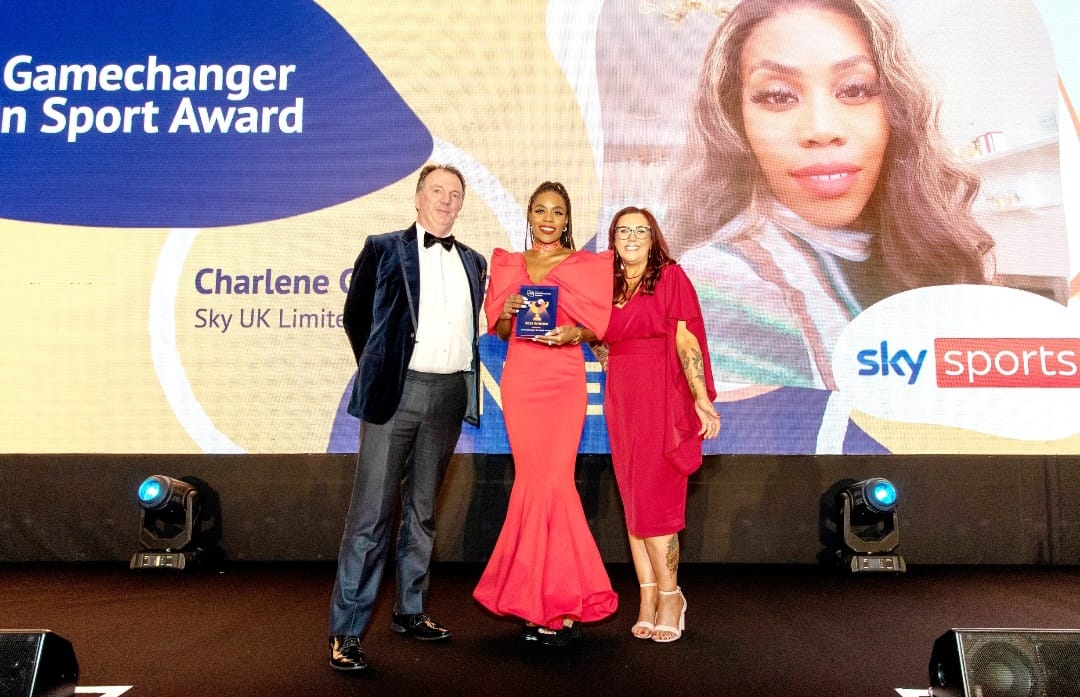
However, the most significant milestone in my career was being named the Game Changer in Sport Businesswoman of the Year. This award meant the world to me because it came during one of the most challenging periods of my life. After being diagnosed with PTSD the previous year, I felt my career might be over. Winning such a prestigious award within six months of returning to work - after being on leave due to my mental health - was one of the greatest moments of my life.
People often only see the successes, the awards, and the accolades, and they automatically assume my journey has been an easy one. However, I have faced many obstacles throughout my career.
Navigating an industry where you don't see many people who look like you can significantly affect your mental health. Constantly having to go above and beyond for promotions. You can receive recognition and accolades nationally, yet not be promoted, this also takes its toll. Fortunately, I have a great support system. From a young age, I was told that I would have to work twice as hard just to be given similar opportunities, and even then, those opportunities may never materialise.
This sobering reality could be difficult for some to bear, but in many ways, it made me even more determined to succeed. I made it my mission to prove wrong those who consistently placed me into a box, and I haven’t looked back since.
The issue of how the sports media industry can better support and promote women is deeply nuanced. While the industry certainly needs to improve the representation of women overall, it is especially critical to address how Black women are perceived and treated.
I recall a few years ago when both Simone Biles and Naomi Osaka took much-needed time out for their mental health. Instead of receiving support like swimmer Adam Peaty and cricketer Ben Stokes, they faced sexism and racism.
The industry cannot truly support or promote women's sports until it supports ALL women and addresses its evident issues with misogynoir.
The industry cannot truly support or promote women's sports until it supports ALL women and addresses its evident issues with misogynoir.
From a young age, I recognised injustices, and there was always something about that that never sat well with me. I’ve prided myself on being a voice for the voiceless, both in my personal life and particularly in my professional career. I use the power of storytelling through the lens of sports to be a disruptor. Creating stories from ideation to post-production, with underrepresented communities at the forefront, has been integral to how I use my voice.
I remember creating a film after the murder of George Floyd called "George Floyd 100 Days On: How Sport Fought for Change" and being told that the length of the film was far too long. The film ran for 8 minutes and 46 seconds, the exact length of time police officer Derek Chauvin knelt on George Floyd's neck - during the court case we found out it was actually longer at 9 minutes and 29 seconds. Explaining this to a director was a pivotal moment in my career where I felt like a Disruptor. I refused to make the film shorter because I had the emotional intelligence to recognise the immense impact it would generate. A few people said I should create two versions but I had confidence in what I had created.
I am pleased to say the film did create a significant impact. It was shown in schools as part of the Show Racism The Red Card campaign and went on to win multiple awards.
My Disruptor days are far from over, and I would like to announce that I am in the process of launching my own sports media production company called INK MEDIA.
Ink Media's mission is to leave an indelible mark on the sports industry by being the leading organisation in innovative and diverse content creation. This will be done by demonstrating our ability to connect with audiences via the power of consistent creative storytelling.
Ink Media is a direct response to the lack of diverse sports stories being told in mainstream media.
I don't know many Black female sports media CEOs, in fact, I'm not even sure I could name two! I couldn't see it, so I became one. I'm hoping this new chapter in my life encourages other women and girls to chase their dreams.
Being a Disruptor shouldn't be seen as a negative; in many ways, I see it as a badge of honour. Without Disruptors challenging the status quo, we would all conform to a capitalist and misogynistic society, and who really wants that?
With over 16 years of experience in the Sports media industry, Charlene Gravesande is passionate about creating sports content that engages and informs audiences across multiple platforms. She has a proven track record of producing thought-provoking and award-winning films, features and live content that cover a wide range of topics, from social justice and diversity to innovation and excellence in sports.


Member discussion